
Protective workwear for electrified industry
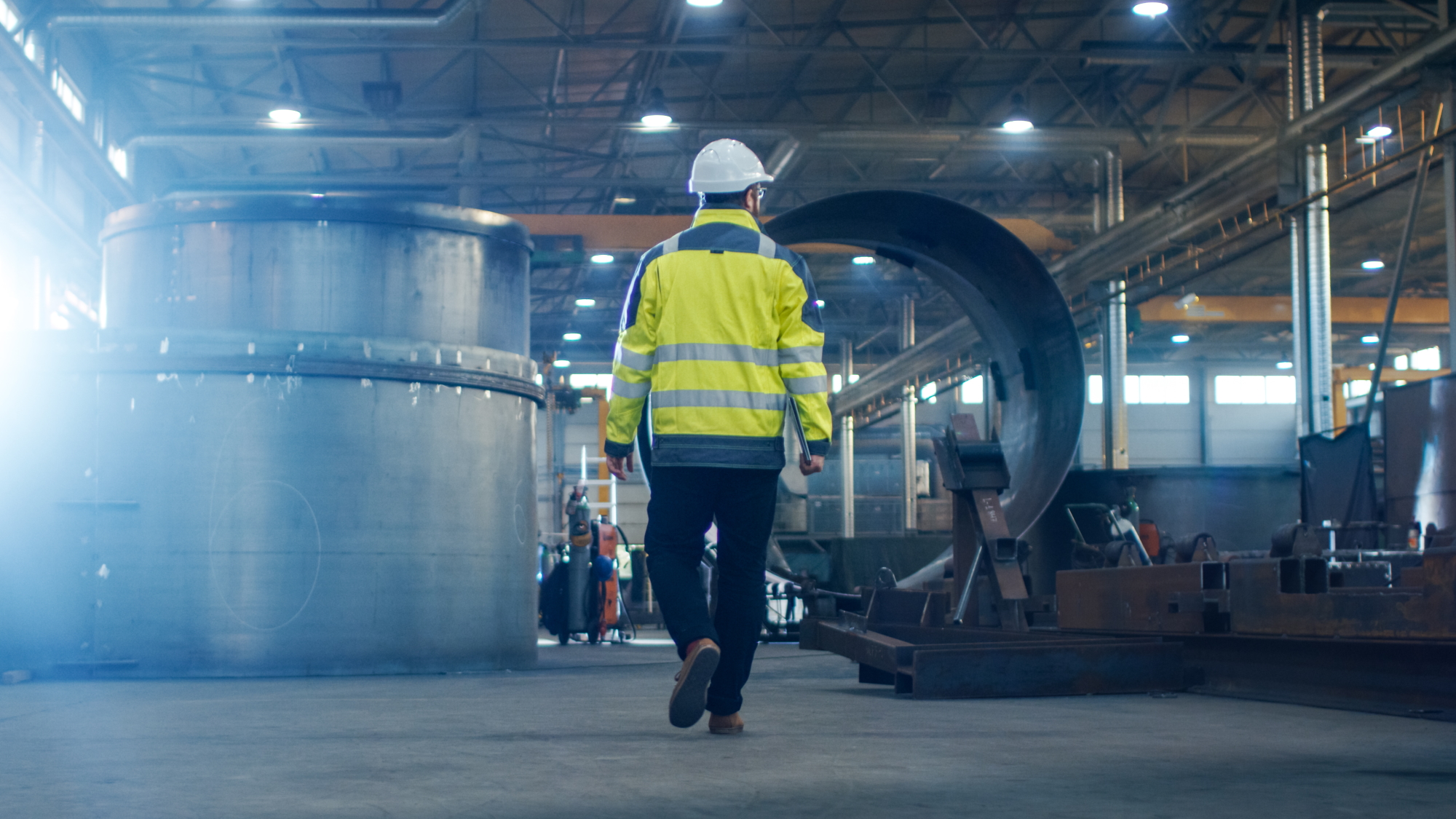
When does electrification change the workwear brief?
Review the clothing specification when a change in equipment, materials or working methods changes a person’s exposure.
Take a warehouse charging area. Operating an intact charging unit, servicing an electrical cabinet and handling a damaged lithium-ion battery are different jobs. A single entry for “battery work” in a garment brief gives a supplier too little information to distinguish them. Thermal runaway occurs when a battery cell generates heat faster than it can dissipate it. A failing cell can release gases and heat neighbouring cells. OSHA guidance on lithium-ion battery hazards.
Start with the site risk assessment. The safety team identifies the task, the controls already in place and the remaining exposure. The garment developer can then specify where coverage is needed and which evidence a material supplier should provide. NIOSH hierarchy of controls.
Three risks, one changing workplace.
FIRE. ARC. CHEMICAL. The campaign brings them together; a technical assessment must distinguish them. Each has its own exposure conditions and protection limits.
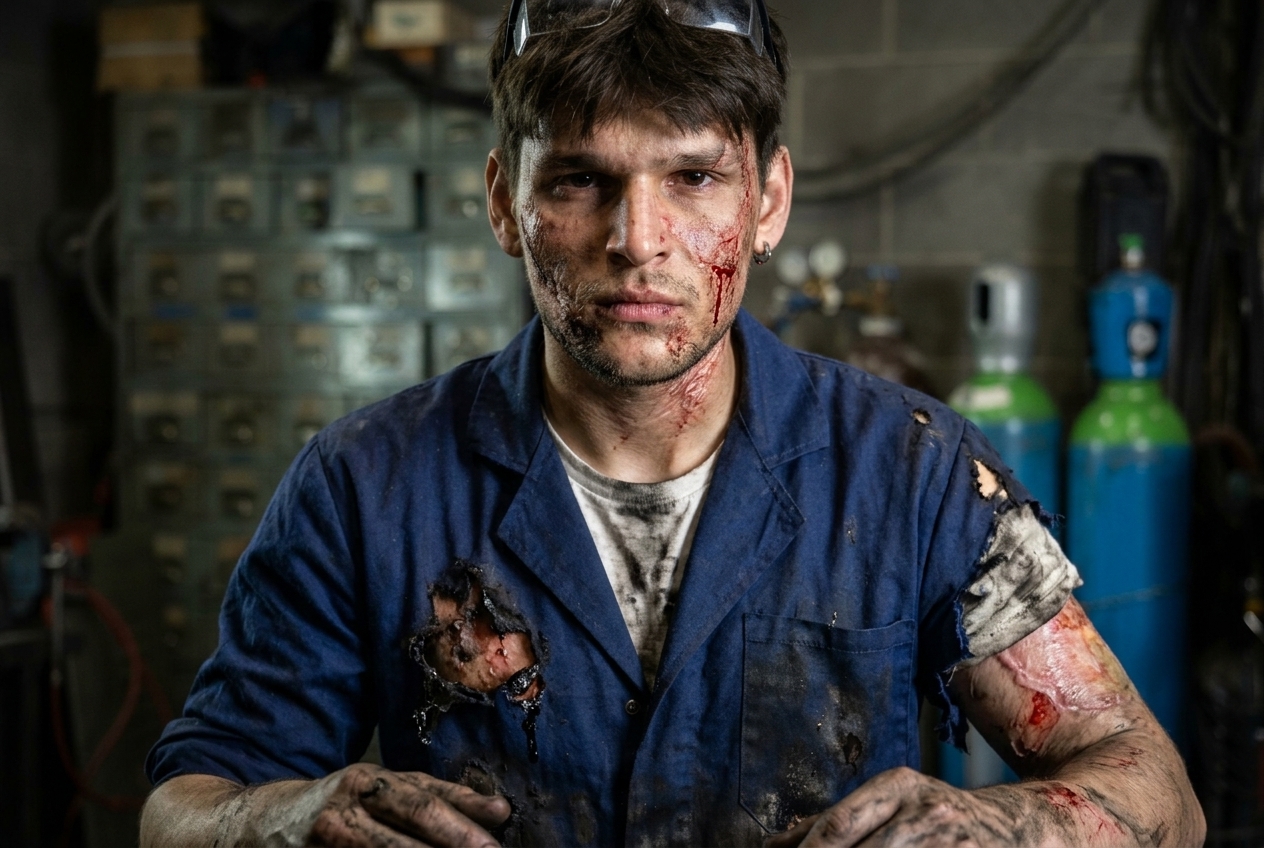 FIRE
Heat and flame.
Thermal exposure may come from an industrial process, an ignition source or a failing battery. Lithium-ion battery thermal runaway can release heat and flammable or hazardous substances. Its presence does not make routine battery work equivalent to firefighting. [2]
Technical insight
EN ISO 11612 addresses clothing performance against specified heat and flame exposures. Relevant performance levels must match the application. [3]
Textile consideration
Evaluate flame resistance and heat transfer in the intended construction, together with its care conditions. A flame-resistant label alone does not define the full protection required.
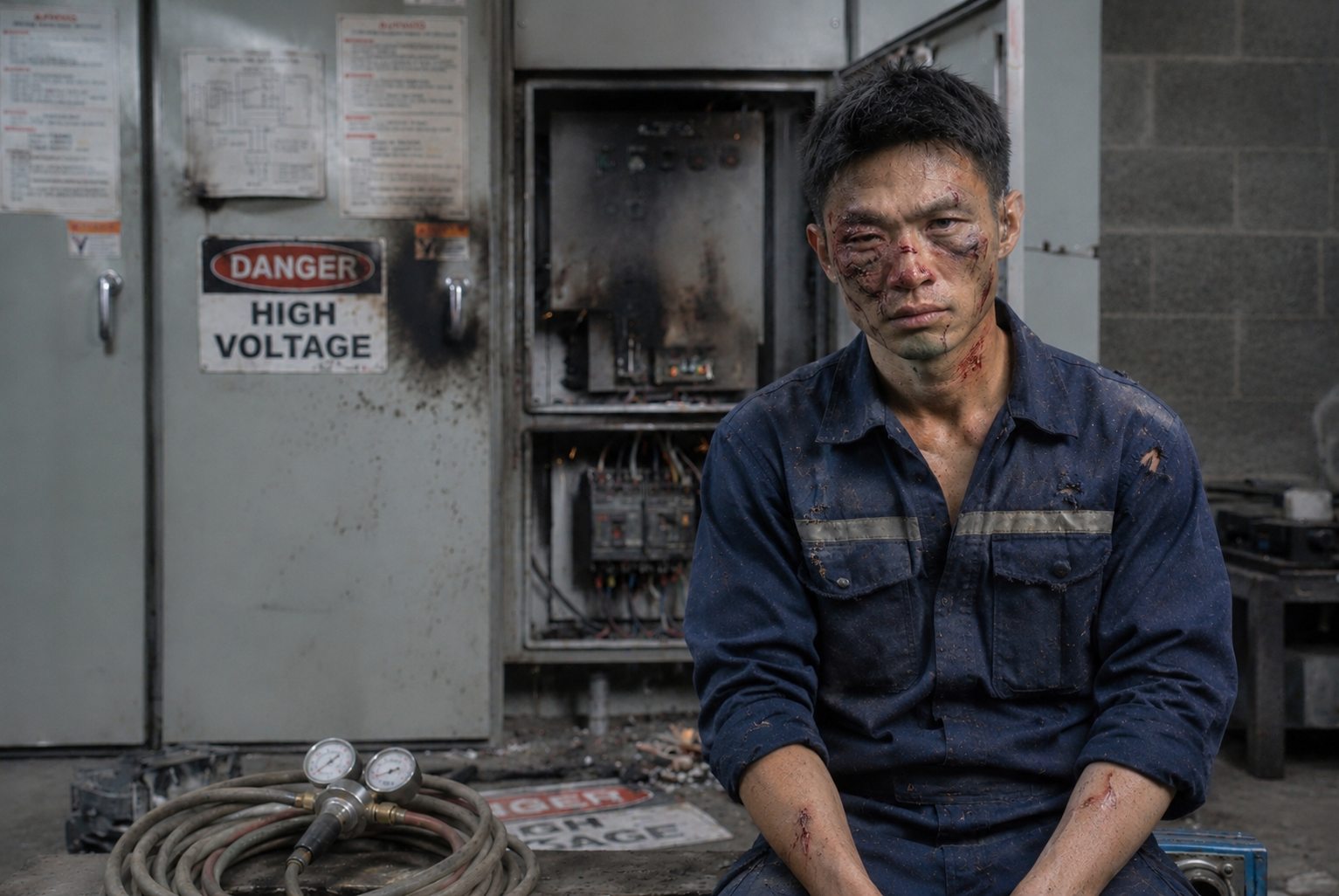 ARC
An electrical fault.
A thermal hazard.
An arc flash can transfer intense thermal energy during an electrical fault. Clothing selection must follow the assessed task and exposure, including incident energy where applicable. Flame resistance by itself does not establish an arc rating. [4] [5]
Technical insight
EN 61482-2 addresses the thermal effects of an electric arc. It does not establish electric-shock protection or protection against every arc effect. [4]
Textile consideration
Arc flash protective fabrics need relevant test evidence. Open-arc results and box-test classes describe different test approaches; they are not interchangeable labels. [5]
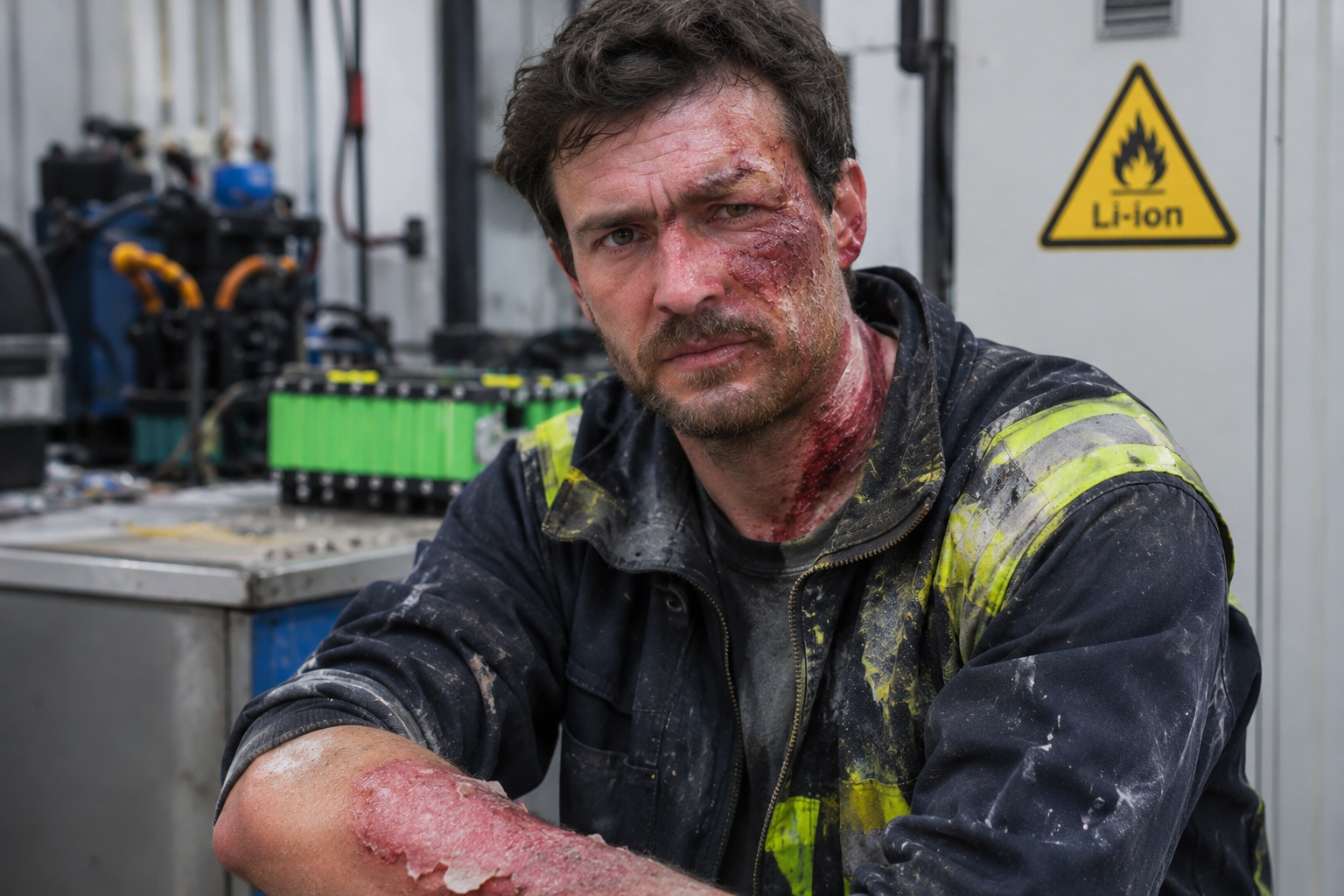 CHEMICAL
Know the substance.
Define the barrier.
Battery manufacturing and recovery can involve electrolytes, solvents and other process materials. Damaged cells may release hazardous contents. Exposure depends on the chemistry, process and condition; it cannot be inferred from the word "battery". [2]
Technical insight
EN 13034 covers limited protection against liquid chemicals, including Type 6 and partial-body PB [6] clothing. It is not a universal chemical-resistance claim. [6]
Textile consideration
Review the safety data sheet, concentration, temperature and contact duration against relevant material data. Liquid repellency alone does not demonstrate a permeation barrier or respiratory protection.
Why traditional protection may not be enough.
The trigger for reassessment is a change in exposure.
Existing PPE may remain suitable. But a selection made for one process should be reviewed when new equipment, energy sources, substances or maintenance activities enter the workplace. Overlapping hazards can also require compatibility checks: adding a chemical layer, for example, may affect heat burden and the performance of an underlying clothing system.
New installation or power system?
Review operating, maintenance and fault scenarios separately.
New battery chemistry or process?
Identify the substances and routes of exposure before specifying a barrier.
New garment combination?
Check the evidence for the actual layers, closures and protective interfaces.
Can individual fabric ratings be added together?
Fabric engineering shapes how a protective garment behaves. Fibre choice, construction and finishing must work together with garment design and the intended protective system.
Ask for the arc test result for the specific layer combination. Adding the individual fabric ratings does not establish the performance of the assembly.
Open-arc testing can assess a material, a garment or a garment assembly under controlled conditions. Check which was tested, in what order the layers were worn, and whether the proposed design matches the report. IEC 61482-1-1 open-arc test method.
What should you look for when choosing a fabric?
01 / Fibre selection
Start with material behaviour.
Fibre chemistry and blends influence response to heat, moisture and mechanical stress. Flame resistant workwear fabrics may use inherent fibre properties or a treatment route; selection still requires evidence for the finished construction and its intended care regime.
02 / Fabric construction
Engineer the structure.
Yarn choice, fabric mass, thickness, weave or knit, and finishing influence the development brief. Compare candidate constructions against the required tests and wearer needs. Weight alone is not a reliable measure of protective performance.
03 / Hazard-specific performance
Validate the right property.
Heat and flame resistance, arc-thermal performance and chemical protection answer different questions. A coating or laminate may be appropriate for a specified exposure, but its barrier performance, durability and compatibility need validation rather than assumption.
04 / Comfort and service life
Design for a working shift.
Assess breathability, thermal burden, mobility, abrasion and care alongside protection. Durable materials and usable garment designs support repeated wear, but performance retention must be checked under the specified laundering and maintenance conditions.
Which evidence applies to each hazard?
A flame-resistant fabric, an arc-tested assembly and a garment assessed for limited liquid splashes answer different specification questions. An arc flash is a sudden release of heat and light from an electrical discharge through air. It can burn a worker and ignite clothing. OSHA guidance on electric-arc flash hazards.
EN ISO 11612
Heat & flame
What it addresses
Minimum performance requirements for clothing protecting against specified heat and flame hazards. [3]
What to check
Relevant performance codes and levels. This designation does not supply an arc rating or a chemical-barrier assessment.
EN 61482-2:2020
Electric-arc thermal effects
What it addresses
Requirements for arc-thermal protective clothing. Based on IEC 61482-2:2018, with European modifications. [4]
What to check
The stated test route, result and garment configuration. Electric shock and toxic influences are outside its scope.
EN 13034
Limited liquid-chemical protection
What it addresses
Limited-performance chemical protective clothing, Type 6 and Type PB [6]. [6]
What to check
The tested chemicals and performance, body coverage and intended exposure. Do not extend the claim to gases or all battery chemicals.
These are scope summaries, not a specification or conformity assessment. Confirm the applicable edition, performance requirements and garment documentation for the intended market and use.

Engineering for real-world conditions.
A laboratory result matters most when the clothing is appropriate for the work and worn as intended. Translate the exposure assessment into a development brief that includes the whole shift.
01 / Understand
Map the work.
Record routine tasks, maintenance, ambient conditions and foreseeable abnormal situations. Treat emergency response as a separate assessment.
02 / Develop
Build the system.
Specify materials, garment coverage and interfaces with other PPE. Check reach, kneeling, movement and closure use.
03 / Validate
Test and trial.
Combine relevant laboratory evidence with wearer feedback. Review thermal burden, fit and compatibility under representative conditions.
04 / Maintain
Keep it effective.
Define cleaning, inspection, repair and replacement criteria. Reassess when processes or garment combinations change.
From an application brief
to a textile development.
Concordia Textiles develops and manufactures workwear fabrics with attention to the application, durability, wash performance and wearer comfort. Its published workwear approach connects textile expertise with industrial production.[8]
For PPE manufacturers and garment developers, that provides a starting point for a practical development discussion: the intended use, material options, performance evidence and how a textile will be integrated into the garment.
Tailored textile solutions begin with a defined requirement. Share the hazards, target performance, care conditions and garment concept so that development can focus on the properties that matter. Final garment design, applicable conformity assessment and correct use remain essential.
891 AS FOREMAN FLAMESTOP
891 AS FOREMAN FLAMESTOP
891 AS FOREMAN FLAMESTOP
891 AS FOREMAN FLAMESTOP
891 AS FOREMAN FLAMESTOP
Tell us what your textile needs to do.
Let's start with your application
Share your application, specification and development priorities.
Start a conversation with Concordia.
