
Medical Textiles for Healthcare & Medical Equipment
Concordia Textiles develops and manufactures technical fabrics for medical and healthcare applications, from patient handling and mattress covers to reusable gowns and cleanroom clothing.
FABRIC LIBRARYcontact our team
Start with the intended use, construction and care process. Then identify the evidence your finished product needs.
Application First
What Are Medical Textiles?
Medical textiles are fabrics and textile constructions used in healthcare equipment, patient care and protective clothing. Their requirements depend on the application: a transfer sheet, mattress cover and reusable surgical gown need different properties and evaluation. A fabric description or test result alone does not establish suitability for every finished medical product.
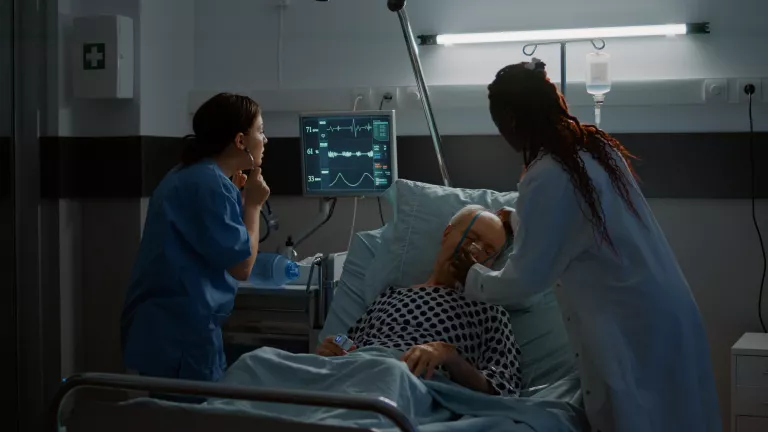
Medical Textile Applications



Technical Properties of Medical Textiles
The application determines which properties matter. A useful specification connects each requirement to a method, condition and acceptance criterion.
Mechanical performance
Specify tensile, tear and abrasion requirements where they matter to the application. Include direction, sample conditioning, assembly and relevant post-care properties; do not compare values from different methods as if they were equivalent.
Care durability & stability
Define washing, cleaning, drying and any reprocessing steps separately. Request evidence for the actual protocol and the properties that must remain within the agreed specification after care.
Surface & barrier behaviour
Liquid resistance, vapour transfer, friction and cleanability serve different purposes. Select the properties needed for the application and request results for the complete textile construction.
Processing & contact requirements
Confirm sewing or welding compatibility and the effects of assembly. Where biological evaluation or flame testing is relevant, agree the appropriate assessment with the finished-product manufacturer and technical specialists.
Compare on a consistent basis
Choosing the Right Medical Textile
Use these application questions to prepare your shortlist. Material composition and performance must be confirmed for the specific candidate.
Application | Material / construction route | Important properties to specify | Selection considerations | Relevant Concordia solution |
|---|---|---|---|---|
Patient handling & transfer textiles | Application-specific fabric construction | Surface friction and handling behaviour; Mechanical properties and seam construction; Dimensional stability after the intended care process | Fabric selection for sliding sheets, lifting slings and evacuation equipment begins with how the textile is used and assembled. | |
Medical mattress & cover textiles | Construction selected for the cover or inflatable component | Liquid resistance and vapour-transfer requirements; Cleaning-agent and care compatibility; Joining method, seams and application-specific flame requirements | Mattress covers and inflatable textile components need a clear brief for their surface, assembly and cleaning requirements. | |
Reusable gowns & surgical drapes | Polyester-containing fabric constructions described in the range | Intended barrier and cleanliness requirements; Comfort and mechanical properties; Specified laundering and reprocessing evidence | Gown and drape fabrics should be selected around the intended use, barrier requirements, garment design and reprocessing route. | |
Cleanroom & clean air suit fabrics | Synthetic-filament fabrics described in the range | Particle release and construction requirements; Electrostatic properties where specified; Care protocol and garment-system evaluation | Controlled-environment clothing requires a defined brief for particle behaviour, garment use and care. | |
Technical knitted textile development | 3D knitted construction; yarn selection is project-specific | Structure, thickness and dimensional tolerances; Compression, recovery and airflow requirements; Application-specific care and validation | Knitted structures offer a development route where the textile’s geometry, thickness or flexibility forms part of the design brief. |
This comparison identifies selection questions and application routes. It is not a table of product test results or universal suitability claims.
Define the application
Describe the finished product, intended users, environment and how the textile will function within it.
Specify the construction
Identify fibre or yarn requirements, coating or backing where relevant, weight, width, joining method and dimensional constraints.
Agree the evidence
List required properties, test methods, conditioning, care procedures and acceptance criteria. Confirm the scope of each report.
Evaluate the candidate
Use samples and the agreed evaluation plan to assess the fabric within your intended assembly before confirming the final specification.
From requirement to candidate
Custom Medical Textile Development
Concordia’s published production and development capabilities include weaving, knitting, finishing, coating and lamination. A medical textile project starts by deciding which construction and processing route is relevant to the application.
Share your current material, design constraints and required improvements. Discuss whether an existing fabric candidate can be evaluated or a development route is needed, then agree the sampling and validation steps. Requirements for testing coordination, production scale and supply are confirmed for the individual project.
Explore our production capabilities Explore advanced textile development Browse fabric candidates

Questions from technical buyers
Frequently Asked Questions
Which properties matter for patient lifting sling fabrics?
Mechanical properties, extension, seam design, dimensional stability and care compatibility are important selection questions. A fabric tensile result is not a safe working load for a finished sling; the complete equipment must be assessed for its intended use.
What should I ask about medical mattress-cover fabrics?
Specify liquid exposure, cleaning agents, flexibility, vapour-transfer requirements and assembly method. Ask for construction-specific evidence and confirm any joining, flame-performance or contact requirements relevant to the finished product.
How do coated and laminated fabrics differ?
A coating is applied to a textile substrate; a laminate combines bonded layers. The construction alone does not determine suitability. Compare documented results for the complete candidate, its joining process and intended care conditions. Coating vs lamination
Does washable also mean disinfectable or sterilisable?
These are separate requirements. State the intended cleaning, disinfection and any sterilisation processes, then request evidence for the relevant fabric and finished assembly. Do not infer compatibility with one process from a test of another.
How should wash durability be evaluated?
Define the protocol, cycle count and post-care acceptance criteria. Review relevant dimensional, mechanical, surface and barrier properties after the specified process. A cycle count has meaning only with its test conditions and measured outcomes.
Can every medical textile be used in a cleanroom?
Suitability depends on the controlled environment, clothing system and required evidence. Define particle behaviour, construction, electrostatic requirements where relevant, and the care programme before choosing a fabric.
Can we discuss a knitted construction for medical equipment?
Yes. Concordia’s published 3D knitting work provides a development route to discuss. Share your structure, thickness, surface, compression and care requirements so the proposed construction and its validation can be assessed.
Does a textile test report certify our medical device?
No. A report describes the evaluated sample, method and conditions. It can support the finished-product manufacturer’s assessment, but it does not by itself establish finished-device certification, regulatory approval or suitability for every application.
What information should we send with an enquiry?
Include the application, textile function, construction and assembly constraints, required evidence, care process and sampling objective. Share target quantities or timing where known so the technical and commercial teams can review the project.
Find the right textile for your medical application
Developing a medical or healthcare product? Discuss your material requirements with our technical textile specialists.