
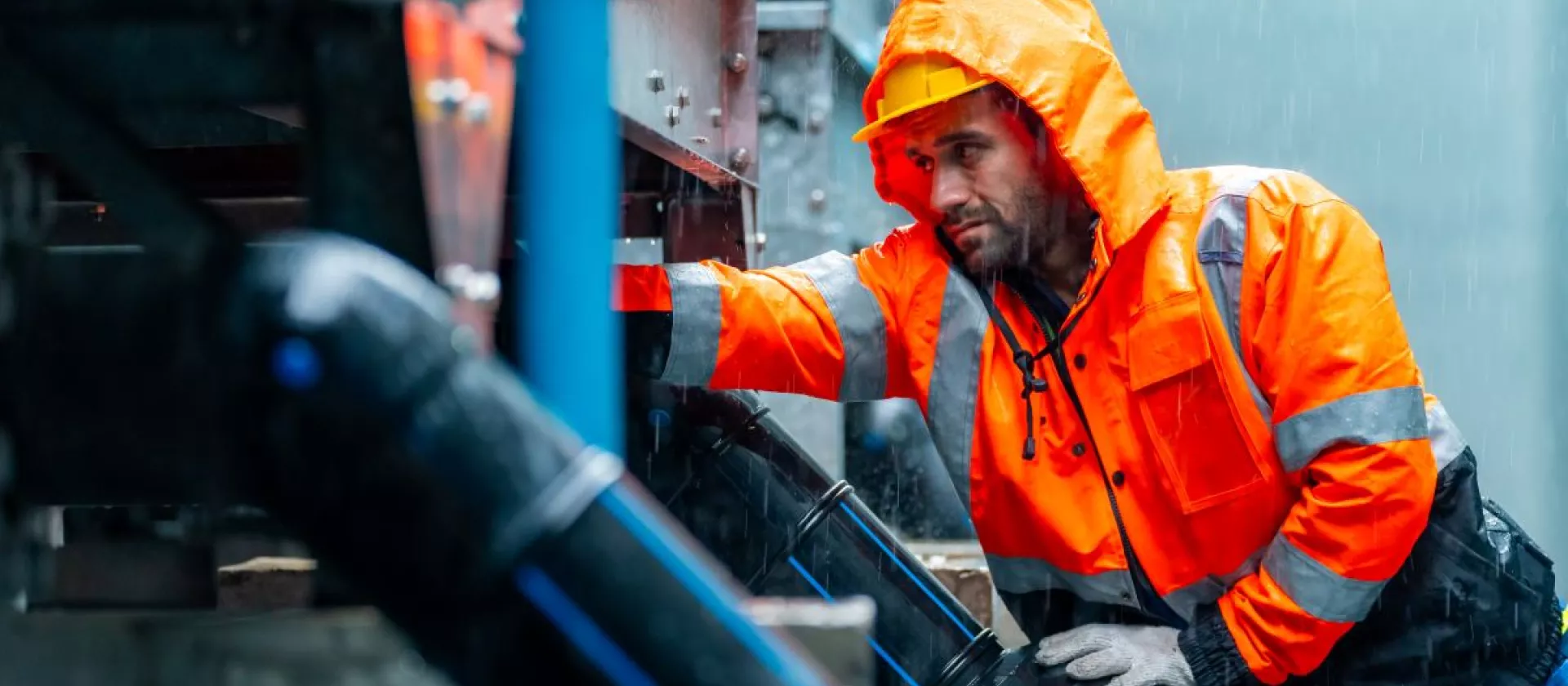
Waterproof & Breathable Fabrics for Workwear
How to Choose the Right Membrane for Your Application
Does your team work outdoors, in harsh weather conditions, or in conditions where sweat needs to escape without letting water in? Then you need a fabric that is both waterproof and breathable at the same time - two properties that are surprisingly difficult to combine in a single fabric.
This guide explains, in plain terms, how waterproof breathable fabrics actually work, what the difference is between a coating and a membrane, which technology fits which industry, and what questions to ask before you specify a fabric for your next workwear collection.
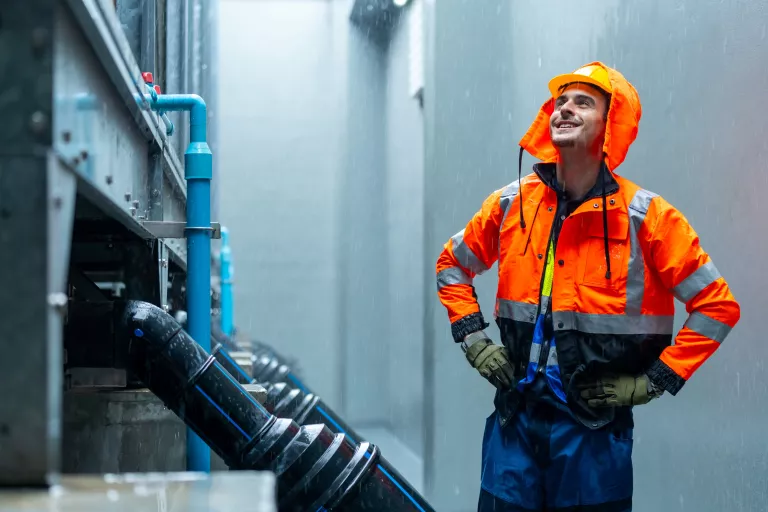
What Does "Waterproof and Breathable" Actually Mean?
These two words are used together so often that their real meaning gets lost. Here is what they mean in practice:
Waterproof
A fabric is waterproof when liquid water cannot pass through it under normal working conditions. Its resistance is measured with a hydrostatic head test: the amount of water pressure the fabric can withstand before leakage begins.
Breathable
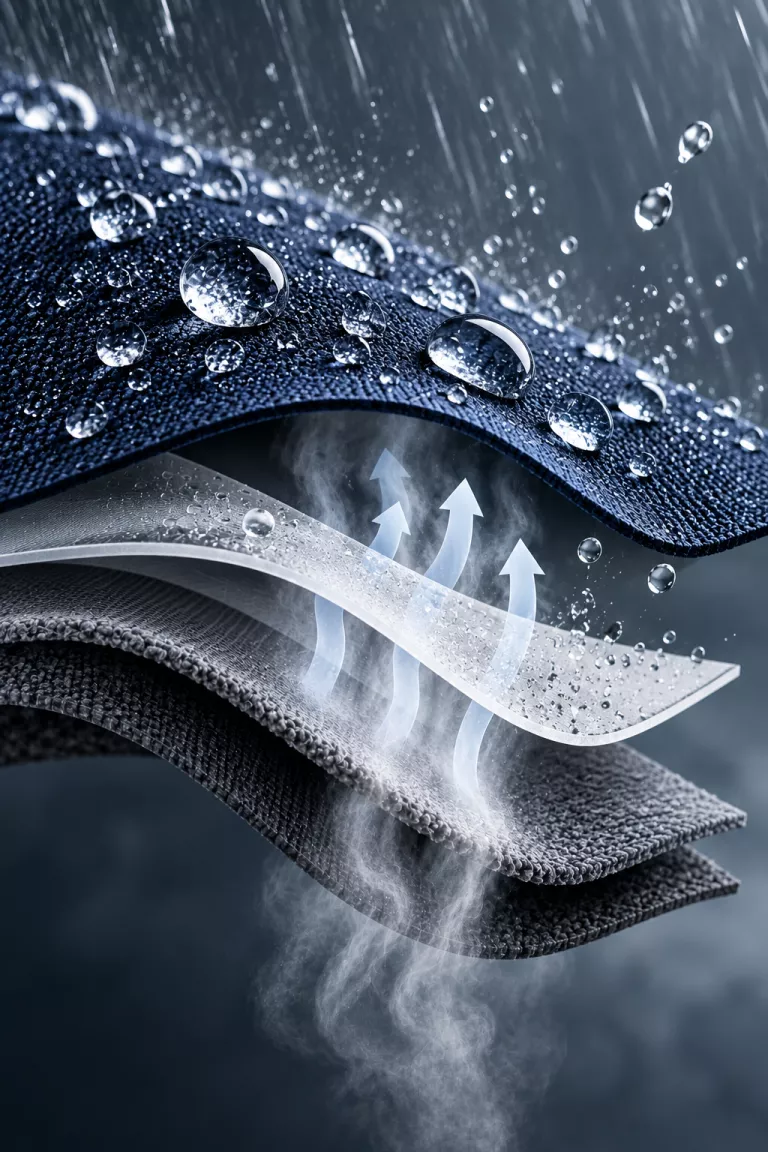
Breathability is the ability of water vapour — the moisture generated by your body — to move through the fabric. Without it, a waterproof garment can trap heat and moisture inside, leaving the wearer wet from sweat rather than rain.
The challenge - and the reason this is a technical field of its own - is that keeping water out and letting vapour out are two competing goals. Getting both right at the same time is what separates a well-engineered fabric from a basic rain shell.
Coating or Membrane? The Two Ways to Make a Fabric Waterproof
There are two fundamentally different ways to make a fabric waterproof and breathable. Understanding the difference helps you ask the right questions when specifying a fabric.
Coating
With coating, the entire surface of the fabric is covered with a chemical layer - usually a polyurethane (PU) dissolved in a solvent with additives. Breathability is built into this layer by adding hydrophilic (water-attracting) molecules, which allow water vapour to migrate through the coating via a process called diffusion: moisture moves from the humid inside of the garment to the drier outside. Coatings are a cost-effective way to achieve waterproofing, but they generally offer less breathability than a separate membrane.
Membrane (lamination)
With lamination, a separate thin film - the membrane - is bonded onto the fabric rather than dissolved into it. This membrane does the waterproofing and breathability work, and it can be combined with different outer fabrics depending on the look and feel the end product needs. Because the membrane is a distinct layer, manufacturers have more control over exactly how waterproof and how breathable the final result will be.
In short: coating is simpler and more economical, while lamination with a membrane generally gives better, more consistent performance - which is why most professional and protective workwear relies on membrane technology.
Membrane Types Explained: PU, PTFE, TPU and PES
Not all membranes are the same. Each one has a different balance of waterproofing, breathability, durability and cost. Here is what buyers need to know about the most common types - explained without the jargon.
PU
The versatile all-rounder
The most widely used membrane in workwear and rainwear. PU is elastic, soft and moves comfortably with the body. It performs well in most rain and weather-protection situations, but is less resistant to very high temperatures or aggressive chemicals.
Flexible + balanced
PTFE
Maximum performance
PTFE combines extremely high waterproofing with strong breathability, thanks to its microporous structure. It performs well in demanding outdoor, military and medical applications, but comes at a higher price and is more difficult to laminate to other fabrics.
Waterproof + breathable
PES
Mechanical strength at lower cost
PES membranes offer solid mechanical strength and reasonable waterproofing at a lower cost than PTFE. The trade-off is generally lower breathability compared with PU or PTFE. PES membranes are also not suitable for industrial laundry.
Strong + cost-efficient
TPU
Built for tougher use
TPU combines waterproofing with strong abrasion resistance. That makes it particularly interesting for tactical, police and heavy-duty applications where the material must withstand rough daily use.
Waterproof + durable
Membranes can also be combined. A PU/PTFE construction, for example, can make an otherwise difficult-to-bond PTFE membrane easier to tape and seal at the seams.
Dot Lamination: Why the Bonding Method Matters Just as Much as the Membrane
Choosing the right membrane is only half the equation. How that membrane is attached to the fabric has a direct impact on comfort, durability and breathability.
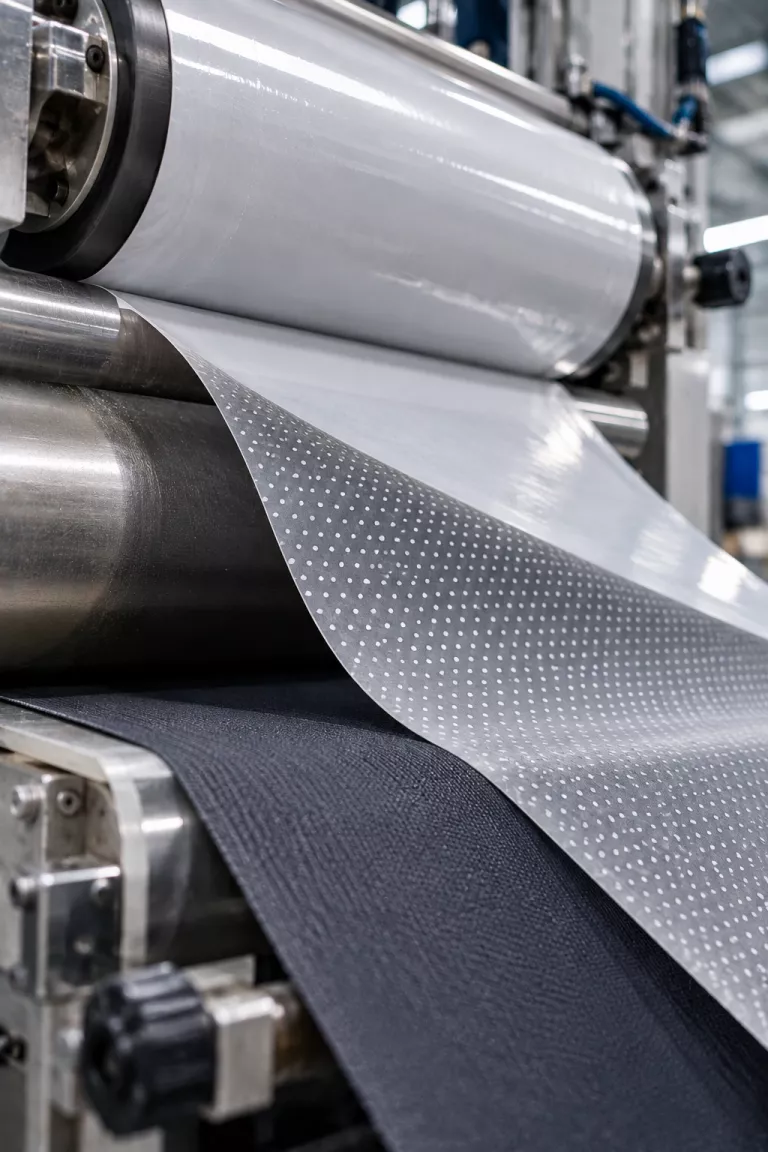
Dot lamination is a bonding method where the adhesive is applied in a dotted pattern, rather than covering the entire surface. This matters for a simple reason: the open areas between the dots stay free, so the membrane's breathability is preserved instead of being sealed shut by adhesive.
Dot lamination brings several practical advantages:
- Breathability: the open dot pattern keeps the membrane's ventilation properties intact
- Flexibility: the fabric keeps its natural drape and softness, so garments don't feel stiff
- Durability: stress is spread across many small bonding points, which helps the fabric withstand repeated washing and wear
- Efficiency: it uses less adhesive than a fully bonded surface, which also helps keep costs down
- Moisture control: sweat vapour can still escape efficiently, which matters in physically demanding jobs
Depending on the desired finish and feel, dot-laminated membranes can also be finished with an additional layer - such as a tricot lining or fleece backing - though this final layer will itself have some impact on the overall breathability of the garment.
Which Membrane Fits Your Industry?
The right membrane depends entirely on what your team actually needs it to do. Here is a practical starting point per application:
Protective clothing (PPE)
Protective clothing (PPE)
Does your team need protection against rain, chemicals and everyday wear at the same time? PU, PES and ePTFE/PU combinations are typically the preferred membranes here, often supporting standards such as ISO 20471 (high visibility), EN 13034 (chemical splash) and EN ISO 24232 (rain protection). The priority is a balance of waterproofing, chemical resistance and breathability.
Military
Military
Military applications call for ePTFE or PES membranes, prioritising multi-threat protection, durability and - importantly - a quiet, "stealth" fabric that doesn't rustle during movement.
Police
Police
For active duty, TPU, PU or ePTFE membranes are typically favoured, balancing breathability and water resistance with the mobility officers need during physically demanding shifts.
Corporate wear
Corporate wear
For office or client-facing teams who need a smart, comfortable jacket that also handles the weather, microporous PU or TPU membranes are the usual choice. The focus shifts toward comfort, softness and cost-efficiency rather than extreme protection - and dot lamination is widely used here specifically to keep the fabric soft and good-looking.
Coating and Lamination Technologies: A Quick Reference
For teams working directly with our technical range, here is a simplified overview of the coating and lamination options available. Each is built for a specific balance of waterproofing, breathability, feel and cost.
Coating
A chemical layer is applied directly to the fabric. This is generally a cost-efficient route to waterproofing, while breathability can be engineered through the coating formulation.
Lamination
Lamination bonds a membrane or additional textile layer to the base fabric. This allows more controlled and consistent performance and makes multi-layer constructions possible.
Coating technologies
Lamination technologies
Lamination systems can be combined with foam, polar fleece, tricot or other technical fabrics, while custom membrane integration is possible for specific project requirements.
How Long Should a Waterproof Breathable Fabric Actually Last?
A waterproof breathable fabric is only a good investment if its performance survives real-world use - not just a lab test on day one.
Fewer replacements mean lower total cost of ownership,and less textile waste over the lifetime of a workwear programme. Looking for a more sustainable choice? ;
Frequently Asked Questions About Waterproof Breathable Fabrics
01 What is the difference between water-repellent and waterproof?
Water-repellent fabrics slow down water penetration but will eventually let moisture through under sustained rain or pressure. This is often communicated as DWR. Waterproof fabrics, tested through a hydrostatic head test, are engineered to resist a defined level of water pressure without leaking. If your team works outdoors for extended periods or in heavy rain, waterproof is the specification to look for.
02 Why can’t a fabric be 100% waterproof and 100% breathable at the same time?
Waterproofing and breathability work against each other by nature: keeping liquid water out means closing off the fabric's structure, while letting vapour out means keeping some of it open. Every waterproof breathable fabric is a carefully engineered balance between the two. The right balance depends entirely on the specific use case, which is why there is no single “best” membrane for every application.
03 Does a breathable membrane lose its performance over time?
Yes. Repeated industrial washing, abrasion and general wear can gradually reduce a membrane's waterproofing and breathability. This is exactly why the bonding method, such as dot lamination, and the wash-cycle data behind a fabric matter as much as the membrane material itself.
04 How do I know which membrane is right for my industry?
Start with your actual working conditions, not a general preference for “the best” membrane. Consider how much rain or water exposure is realistic, whether the job involves chemicals, how important quiet movement is, and how much abrasion the garment faces daily. Answering these questions together with your fabric partner leads to a better fit than simply choosing the most expensive or technically advanced option.
Not sure which membrane fits your team's working conditions?
Talk to our team about your specific use case - we'll help you match the right coating or membrane technology to your real working conditions, not just a spec sheet.
